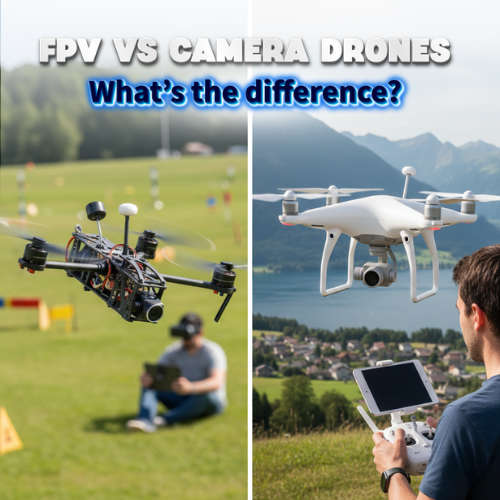
I have been flying drones for about three years now, and recently I just picked up my first FPV drone. Going from a camera drone to an FPV is a pretty big shift, and it got me thinking about how different these two types really are. If you have ever been curious about the difference, here is what you need to know.
Camera Drones:
A camera drone, such as my DJI Mini 3, is designed for smooth, high-quality footage. These drones are stable, easy to fly, and equipped with smart features such as obstacle avoidance, GPS hold, and automated shot modes. The camera stays level with the horizon, which makes it incredibly beginner-friendly. For price, a solid starter option like the Mini 3 runs around $500 to $700, depending on the package, and you get great 4K video out of the box.
FPV Drones:
FPV stands for First Person View. Instead of watching your drone from the ground, you wear goggles that put you directly in the perspective of the drone. It feels less like operating a device and more like actually flying. The DJI Avata 2, which I recently picked up, is a great beginner-friendly FPV option that still shoots excellent footage. FPV drones are built for speed and agility, capable of hitting 60 to 100 mph and flying through tight spaces in ways a camera drone simply cannot. A setup like the Avata 2 with goggles runs around $1,000 to $1,100.
Shot Types and Video Quality:
Camera drones are perfect for slow, sweeping landscapes, real estate footage, and smooth tracking shots. The footage is clean and color-accurate straight out of the drone. FPV footage has a totally different feel, fast, immersive, and cinematic in an action-forward way. FPV drones film aggressive banking turns and low-altitude flythroughs that look almost like a movie scene. Both produce great quality video, just with a very different style.
Which One Is Right for You?
If you are just starting out, go with a camera drone without a doubt. They are more forgiving, easier to learn on, and great for building real flying skills. Once you are comfortable, FPV is an incredibly rewarding next step. I recommend starting in a flight simulator to get the hang of the difference. Neither is better than the other. They just serve different purposes, and after flying both, I can say that having each one brings something completely different to the table.